SUPPLY CHAIN TRANSPARENCY & RESPONSIBILITY
We design and sell our clothing ourselves. Production is handled by specialist suppliers. The clothing supply chain has many links, from the cotton farmer to the factory where your favourite product is sewn together. To work more sustainably and understand our impact, it is important that we know our supply chain. We aim for full transparency throughout our supply chain, all the way back to yarn production. In 2025, we had mapped 90% of this chain.
What have we done so far to achieve this? We started by mapping our direct suppliers and explore the supply chain in greater depth each year, getting to know our indirect business partners, such as laundries and textile manufacturers. The figure below shows each step (stage) in the supply chain and the percentage of our suppliers that have already provided us with information about the factories at these stages.
As you can see, we already have considerable insight into our supply chain. But we are not there yet. That is why we continually work to deepen our understanding. The first step is knowing where our products are made. This allows us to inspect production sites and work with suppliers on improvements.
Where are our products made?*
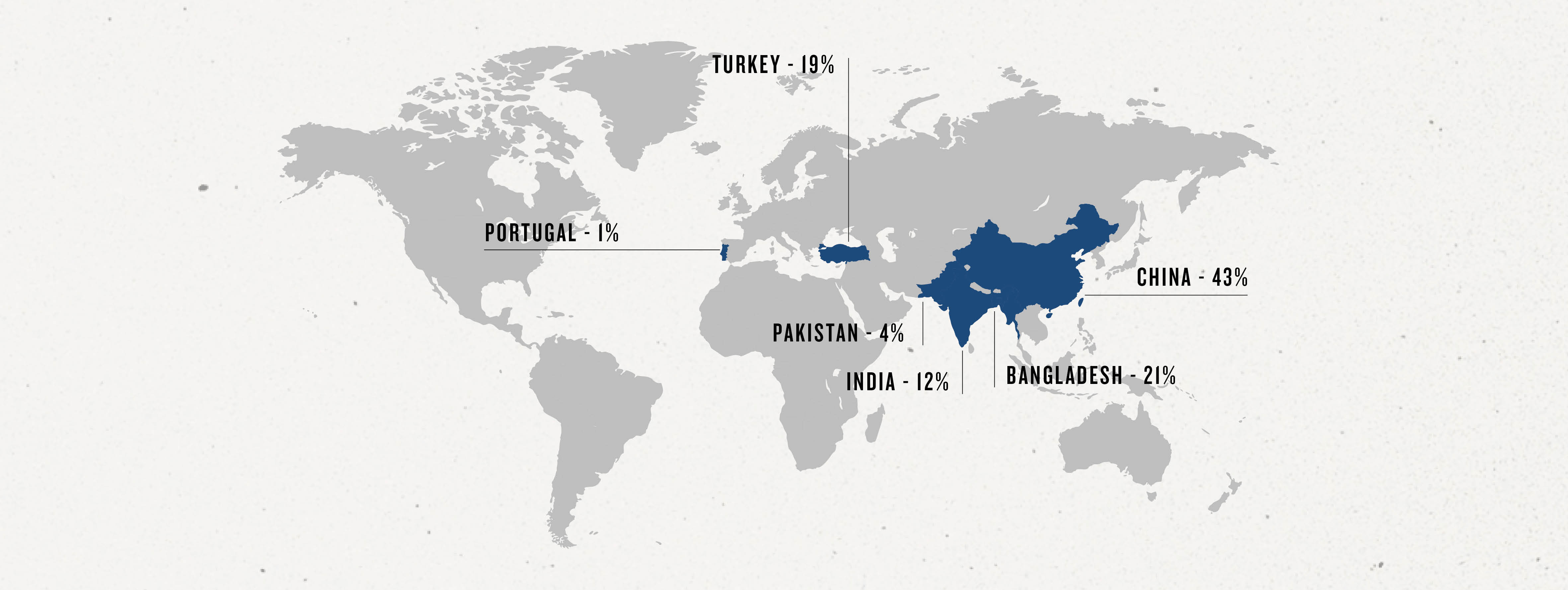
* based on purchasing value in 2024
Supplier agreements
America Today wants to build fair, long-term relationships with suppliers. We want to help our suppliers create a working environment centred on respect for human rights and the environment. We know that our purchasing practices can influence risks in the supply chain. That is why we have established our own purchasing principles. Our buying team aims to work according to these principles to prevent risks and support suppliers. Our standards and values are set out in our Supplier Declaration for Social and Environmental Sustainability. This agreement describes our requirements and guidelines for suppliers on topics such as transparency, how to protect workers’ rights and safety, which chemicals are prohibited in production processes and which materials are preferred or not permitted. Our purchasing principles and the amfori BSCI Code of Conduct are included in this document. All our direct suppliers have signed this declaration.
Factory monitoring
We visit all our garment factories in high-risk countries at least once a year to see factory conditions and the quality of our products first-hand. Our local buying and quality teams carry out inspections covering working conditions, safety and product quality.
We also monitor conditions at our suppliers through independent audits, mainly through the amfori Business Social Compliance Initiative (BSCI), which we joined in 2013. By working with others in the industry, we can combine our efforts and achieve more. Amfori BSCI is an independent organisation that aims to improve working conditions throughout production chains worldwide. An independent assessor inspects the entire factory, talks to workers and checks the records. The purpose of this audit is to identify where the factory can make improvements. BSCI audits take place twice a year, with one or more follow-up audits depending on the areas for improvement identified. For more information, visit amfori.
We try to help our suppliers make improvements by giving them constructive feedback on their improvement plans. Our suppliers can also take part in BSCI training, and we work together on projects addressing specific topics (see, for example, ‘Respect for human rights’). In this way, we can help our suppliers improve their working conditions step by step. All the garment factories we currently work with in high-risk countries are monitored through BSCI or another recognised independent social auditing system. We require at least a C rating in the BSCI system or an equivalent result.
Monitoring factories that use wet processes
In addition to monitoring manufacturing factories, we also want to assess conditions in factories further down the supply chain. We are starting with factories where our products are washed, dyed or printed. This requires specialist knowledge, as these factories use various processes that make fabrics look good but can negatively affect the environment or the people working in the factory. They use large amounts of energy, water and chemicals. In 2021, our colleagues in the local buying teams received training on the risks associated with these processes and the questions they can ask factories, so that we can work with our suppliers to make improvements.
